Miała pojechać do Kambodży do pracy, dziś przemierza Irak i Afganistan. Niezwykła historia Moniki Bilińskiej z Ruszkowa
Historia Moniki Bilińskiej z Ruszkowa koło Koła to opowieść o poszukiwaniu własnej drogi, odwadze do podejmowania życiowych decyzji, nieoczekiwanych trudnościach i zaufaniu do ludzi. 34-latka od prawie roku przemierza świat samotnie, pokonując kolejne granice i poznając miejsca, które wielu osobom kojarzą się przede wszystkim z konfliktami i niebezpieczeństwem. Jej podróż rozpoczęła się od wyjazdu do Kambodży, gdzie miała podjąć pracę. Sytuacja szybko przybrała jednak nieoczekiwany obrót. Zamiast wrócić do Polski, Monika postanowiła ruszyć dalej. Dziś jest w Iraku, a przed nią kolejne państwa i tysiące kilometrów drogi do domu.
W rozmowie z Redakcją Portalu Kolskiefakty.pl opowiedziała o trudnych początkach w Kambodży, samotności, niezwykłej gościnności mieszkańców odwiedzanych krajów, niebezpiecznych sytuacjach w Afganistanie, a także o tym, dlaczego postanowiła przestać żyć według oczekiwań innych i zacząć realizować własne marzenia.
Monika nie ma łatwej odpowiedzi na pytanie, kim jest. Jak sama przyznaje, nie przepada za tym pytaniem i nawet dziś, mimo 34 lat, wciąż zastanawia się, kim będzie, kiedy już dorośnie. Śmieje się, że jest typową przedstawicielką pokolenia millenialsów. Stara się przede wszystkim żyć najlepiej, jak potrafi, w zgodzie z samą sobą i tak, by nie żałować niewykorzystanych szans.
Podróżowanie towarzyszyło jej od dzieciństwa. Pierwsze wyjazdy odbywała z rodzicami, poznając Polskę i kraje ościenne. Później dołączyła do Wartaków, z którymi niemal każdy weekend spędzała w drodze, często jeżdżąc na koncerty. Autobus bywał wtedy jej drugim domem. Również podczas studiów nie potrafiła usiedzieć w jednym miejscu. Zdarzało się, że studiowała w dwóch miastach jednocześnie, a zawodowe i edukacyjne projekty prowadziły ją w różne zakątki Polski.
Przełom w jej życiu nie nastąpił z dnia na dzień. Monika miała dom i dobrze prosperującą firmę. Z zewnątrz mogło się wydawać, że osiągnęła wszystko, o czym marzy wiele osób. Z czasem zaczęła jednak dostrzegać, że w dużej mierze realizuje oczekiwania innych, starając się nikogo nie zawieść i zasłużyć na akceptację. W końcu zrozumiała, że nie jest w stanie uszczęśliwić wszystkich, a sama nie czuje się szczęśliwa.
– Postanowiłam w końcu wybrać siebie. W tym układzie przynajmniej jedna osoba jest zadowolona – mówi z uśmiechem.
Do Kambodży trafiła po roku podróżowania, podczas którego odwiedziła już 12 krajów. Chciała uciec przed zimą i spędzić czas w cieplejszym miejscu. Osoby poznane podczas wcześniejszego sezonu zaproponowały jej, aby została na miejscu na kolejny, bardziej intensywny okres i pomogła przy pracy. Szczegółowe ustalenia miały zostać dopracowane już na miejscu. Rzeczywistość okazała się jednak zupełnie inna. Monika została oszukana, a pobyt, który miał być kolejnym etapem podróży, zamienił się w najtrudniejszy okres całej wyprawy.
– Zrozumiałam dokładnie powiedzenie: Polak Polakowi wrogiem… – wspomina.
Choć na wyspie czuła się bezpiecznie, znalazła się w sytuacji, w której nie wiedziała, co zrobić dalej. Zatrzymała się w najtańszym hostelu, dając sobie tydzień na uspokojenie emocji i przemyślenie kolejnych kroków. Nie ukrywa, że były łzy i chwile zwątpienia. Pomogły jej przyjaciółki, mama oraz świadomość, że nawet najtrudniejsza sytuacja jest tylko pewnym etapem życia. Wsparcie okazali jej również poznani na miejscu ludzie, w tym Rosjanin i Żyd, którzy – jak opowiada – dezerterowali z wojen.
W Kambodży spędziła prawie pół roku. Był to trudny czas, ale jednocześnie okazja do poznania kraju, jego kultury i mieszkańców. Właśnie tam zaczęła się kształtować dalsza część jej niezwykłej drogi.
Pierwotnie Monika nie planowała tak długiej wyprawy lądowej. Jej wcześniejsze zamierzenia pokrzyżowała sytuacja polityczna i konflikt z udziałem Iranu oraz Stanów Zjednoczonych. Nie miała biletu powrotnego do Polski, a ceny połączeń lotniczych, jak wspomina, dochodziły nawet do 10 tysięcy złotych w jedną stronę. Wtedy przypadkowo natrafiła na Facebooku na wpis, w którym ktoś zamieścił mapę i sugerował, że z Omanu można wrócić do Polski drogą lądową.
Zaczęła się zastanawiać, czy podobna trasa byłaby możliwa również z Kambodży. Sprawdziła i okazało się, że tak. Początkowo pomyślała: „Może kiedyś”. Szybko jednak doszła do wniosku, że nie ma sensu odkładać wszystkiego na później.
– Młodsza już nie będę, a teraz jest odpowiedni czas – uznała.
W kwietniu ruszyła w dalszą podróż. Jeszcze w Laosie nie była całkowicie przekonana, czy rzeczywiście zrealizuje tak ambitny plan. Ostateczną decyzję podjęła w Chinach. Wiedziała już, że nie ma odwrotu.
Jej dotychczasowa trasa prowadziła przez Kambodżę, Laos, Chiny, Kazachstan, Kirgistan, Uzbekistan, Tadżykistan, ponownie Uzbekistan, Afganistan, Iran i Irak. Każdy z tych krajów przyniósł inne doświadczenia. Po siedmiu miesiącach spędzonych w biedniejszych krajach, takich jak Kambodża i Laos, Chiny okazały się dla niej wyjątkowo ciekawym doświadczeniem. Nie wskazuje jednak jednego miejsca, które bezapelacyjnie uznałaby za najlepsze.
Podkreśla, że podróżowanie drogą lądową daje możliwość obserwowania zmian, które trudno dostrzec podczas przemieszczania się samolotem. Kultury, języki i zwyczaje nie zmieniają się nagle na lotnisku. Przenikają się stopniowo, a wpływy jednego kraju przechodzą w drugi. To właśnie ta ciągłość jest dla niej jedną z największych wartości takiej wyprawy.
Jeśli miałaby wrócić do któregoś z odwiedzonych miejsc, byłby to Kazachstan. Udało jej się zobaczyć tylko jedną część tego ogromnego kraju, dlatego czuje, że ma tam jeszcze wiele do odkrycia. W każdym państwie zostawiła też wartościowe znajomości, które są dla niej równie ważne jak odwiedzone miejsca.
Największym pozytywnym zaskoczeniem okazał się Irak, a szczególnie iracki Kurdystan, w którym obecnie przebywa. Monika przyznaje, że jej doświadczenia mocno odbiegają od wyobrażeń, jakie można sobie wyrobić na podstawie medialnych doniesień. W jej ocenie czuje się tam bezpiecznie, a mieszkańcy są niezwykle pomocni i życzliwi. Często sami pytają, czy czegoś potrzebuje, oferują wsparcie, a do tego zachwycają ją miejscowa przyroda i kuchnia.
Zapytana, co najbardziej ją urzeka, odpowiada krótko: ludzie i przyroda. Jak mówi, ma oba te elementy w pakiecie.
Podczas podróży przez Afganistan, Iran i Irak przekonała się również, jak bardzo codzienne życie zwykłych mieszkańców różni się od obrazu, który często dociera do nas z nagłówków. Nie chce oceniać całych społeczeństw przez pryzmat polityki czy konfliktów.
– Oni są tacy sami jak my. Chcą żyć w spokoju i dobrobycie oraz pokoju – podkreśla.
Droga do Iraku nie była jednak oczywista. W Kazachstanie przez ponad miesiąc analizowała możliwe warianty dalszej trasy. Sytuacja międzynarodowa była skomplikowana, a napięcia i konflikty w różnych częściach regionu wymuszały ostrożność. Rozważała między innymi przejazd przez Rosję, Turkmenistan i Iran, ale pojawiały się kolejne przeszkody i ostrzeżenia. Ostatecznie zdecydowała się na Afganistan. Przygotowania do tej części wyprawy zajęły jej niemal dwa miesiące. Zdobywała informacje, analizowała możliwości i szukała sposobu, by zwiedzać kraj bez przewodnika.
Pobyt w Afganistanie przyniósł sytuację, która szczególnie zapadła jej w pamięć. Do Kabulu dotarła nocnym autobusem. Dopiero później dowiedziała się, że nie powinna była korzystać z takiego połączenia. Kierowca autobusu i taksówkarze zastanawiali się, jak bez kontroli Talibów bezpiecznie przewieźć ją do hotelu. Samotna kobieta podróżująca z taksówkarzem mogła bowiem narazić na problemy nie tylko siebie, ale również mężczyznę, który jej pomagał.
W pewnym momencie do samochodu wsiadł uzbrojony ochroniarz, który miał udawać jej męża. Jak opowiada Monika, po drodze powinni przejść kontrolę, jednak zdecydowali się jej uniknąć, zdając sobie sprawę z możliwych konsekwencji. Kiedy dotarli do hotelu, okazało się, że nie można jej zameldować z powodu braku rezerwacji. Mężczyzna, który towarzyszył jej w taksówce, zagroził użyciem kałasznikowa i ostatecznie miejsce się znalazło.
Dopiero później znajomy wyjaśnił jej, jak poważne mogły być konsekwencje całej sytuacji. Zgodnie z zasadami narzucanymi przez Talibów część podjętych działań była niedopuszczalna. Monika przyznaje, że w chwili zdarzenia nie zdawała sobie w pełni sprawy z zagrożenia. Dziś wspomina tę historię jako przykład tego, jak ważne podczas podróży jest poznanie lokalnych realiów i zaufanie ludziom, którzy znają je lepiej.
Samotne podróżowanie wymaga nie tylko odwagi, ale też elastyczności. Monika podkreśla, że trzeba szanować lokalne zasady, umieć polegać na sobie, ale czasem również odpuścić kontrolę i zaufać miejscowym. To oni często najlepiej wiedzą, jak rozwiązać problem w konkretnej sytuacji. W długiej podróży nie wszystko da się przewidzieć, a codzienność staje się nie tylko poznawaniem świata, lecz także zmaganiem z własnymi emocjami i przebodźcowaniem.
Jak zauważa, w krajach mniej turystycznych często spotyka się wyjątkową gościnność. Ludzie proponują jedzenie, pomoc, przekazują numery telefonów i zapewniają, że można do nich zadzwonić w razie kłopotów. Zdarza się nawet, że mają do niej pretensje, gdy nie skorzystała z zaoferowanej pomocy.
Takich sytuacji doświadcza niemal każdego dnia. Obecnie mieszka w domu przypadkowo poznanej kobiety. Kontakt otrzymała przez WhatsApp od chłopaka z grupy poświęconej Bliskiemu Wschodowi, kiedy zapytała o możliwość znalezienia noclegu. To kolejny przykład tego, że w podróży często najważniejsi okazują się ludzie.
Monika nie ukrywa, że taka wyprawa wymaga odpowiedniego podejścia również do kwestii finansowych. Większość nocy spędza u lokalnych mieszkańców, korzysta z autostopu i programów wolontariackich. Podróżowanie niskobudżetowe jest możliwe, ale trzeba być na nie przygotowanym i zaakceptować, że nie zawsze będzie wygodnie. Nie planuje każdego dnia z dużym wyprzedzeniem. W przypadku Afganistanu i Iranu konieczne było szczegółowe przygotowanie, zdobycie wiedzy i zadbanie o dokumenty. W pozostałych sytuacjach często wystarcza jej znajomość drogi z punktu A do punktu B, a resztę pozostawia temu, co przyniesie dzień.
Nie oznacza to jednak, że samotna podróż jest nieustanną przygodą pozbawioną trudniejszych chwil. Największy kryzys dopadł ją w Kazachstanie, po intensywnym zwiedzaniu Chin i problemach logistycznych. Była zmęczona, tęskniła za domem i bliskimi. Śniło jej się, że jest w Polsce, a po przebudzeniu potrzebowała chwili, by przypomnieć sobie, gdzie właściwie się znajduje. Trudne były również momenty, kiedy wiedziała, że opuszcza rodzinne uroczystości i nie może być razem z najbliższymi.
Poza własną wyprawą Monika angażuje się także w organizowanie i pilotowanie wyjazdów dla innych osób. Chciała stworzyć przestrzeń, w której ludzie mogliby poznawać się i wspólnie podróżować, nawet jeśli wcześniej się nie znali. Zauważa, że wielu Polakom trudno jest nawiązywać nowe relacje, a wyjazd w nieznane grono osób może być dobrym sposobem na przełamanie tej bariery.
Nie zawsze łatwo przekonać ludzi do takiej formy podróżowania. Pojawia się strach, obawa przed wyjściem poza schemat i pytania: „A co, jeśli…?”. Czasami dodatkowe wątpliwości wzmacniają rodzina i znajomi, którzy zamiast zachęcać, próbują odwieść od pomysłu. Monika podkreśla jednak, że samotna wyprawa i wyjazd grupowy to dwa zupełnie różne przedsięwzięcia. W przypadku grupy trzeba zaplanować znacznie więcej i być przygotowanym na różne nieprzewidziane sytuacje.
Osobom, które marzą o samotnym podróżowaniu, radzi, by nie zaczynały od razu od wyprawy na drugi koniec świata. Warto najpierw wybrać się samodzielnie do pobliskiego miasta, później stopniowo zwiększać dystans i sprawdzać, jak czujemy się we własnym towarzystwie. Bo samotna podróż to nie tylko odkrywanie nowych miejsc, ale również dużo czasu spędzonego sam na sam ze sobą.
W styczniu Monika planuje kontynuować wyprawę. Wśród kolejnych kierunków wymienia Irak federalny, Kuwejt, Arabię Saudyjską, Oman, Jemen, Izrael, Liban, Syrię, Turcję, Grecję, Albanię, Czarnogórę, Serbię, Węgry i Słowację. Ostateczny przebieg trasy będzie jednak zależał od sytuacji politycznej i bezpieczeństwa w poszczególnych państwach. Nie ukrywa, że szczególnie ciekawią ją Arabia Saudyjska i Izrael, jeśli uda się przekroczyć granice i zrealizować te plany.
– Mam milion myśli na minutę, tu może wydarzyć się wszystko – przyznaje.
Jak dodaje, interesuje ją prawda o odwiedzanych miejscach i ludziach, dlatego chce poznawać je z bliska, a nie wyłącznie przez relacje innych. Do Polski chciałaby wrócić około maja, choć również ten termin może się zmienić.
Czy po prawie roku w drodze czuje się innym człowiekiem? Nie do końca. Jak mówi, podróż nie tyle ją zmieniła, ile dała jej przestrzeń, by lepiej poznać tę część siebie, na którą wcześniej nie miała czasu. Nie znalazła jednej recepty na życie i nie próbuje przekonywać innych, że istnieje uniwersalny sposób na szczęście.
– Przychodzimy na ten świat bez żadnej instrukcji obsługi – zauważa.
Zapytana, czy zdecydowałaby się na taką wyprawę ponownie, odpowiada szczerze: „Nie wiem”. Nie ukrywa, że podróż ma swoje blaski i cienie, a długie miesiące poza domem potrafią być wyczerpujące. Mimo to nie zamierza rezygnować z poznawania świata.
Po powrocie chciałaby na chwilę osiąść w jednym miejscu, choć sama przyznaje, że dobrze zna siebie i prawdopodobnie nie potrwa to zbyt długo. Ma już kilka pomysłów na 2027 rok. Część planuje realizować samodzielnie, a część być może z innymi osobami. Nie wyklucza również, że między styczniem a majem pojawi się możliwość dołączenia do wybranych etapów jej podróży. Szczegółów na razie nie zdradza, bo – jak mówi – życie lubi weryfikować plany.
Ważne pozostają dla niej rodzinne strony i Koło. To właśnie stąd pochodzi nazwa jej podróżniczej działalności – „Koło podróży”. Nie jest przypadkowa, bo jak podkreśla Monika, każda jej podróż zaczyna się i kończy w Kole.
Na koniec zapytaliśmy ją, co powiedziałaby mieszkańcom naszego regionu, którzy marzą o zmianie, wyjeździe lub rozpoczęciu czegoś zupełnie nowego, ale powstrzymuje ich strach. Odpowiedziała z właściwym sobie poczuciem humoru, że większą obawę budziłoby w niej zaciągnięcie kredytu na 30 lat, bo to dopiero podróż w nieznane.
A już całkiem poważnie radzi, by niczego nie robić na siłę, stopniowo nabierać wprawy i nie pozwolić, aby strach podejmował za nas wszystkie decyzje. Nie oznacza to, że obawy znikną. Chodzi raczej o to, by nie pozwolić im odebrać sobie szansy na przeżycie czegoś ważnego.
Historię Moniki Bilińskiej można śledzić w mediach społecznościowych – publikuje swoje relacje na TikToku, Facebooku i YouTube. Jej podróż wciąż trwa, a kolejne granice i spotkania dopiero przed nią.
Redakcja Portalu Kolskiefakty.pl
–
–
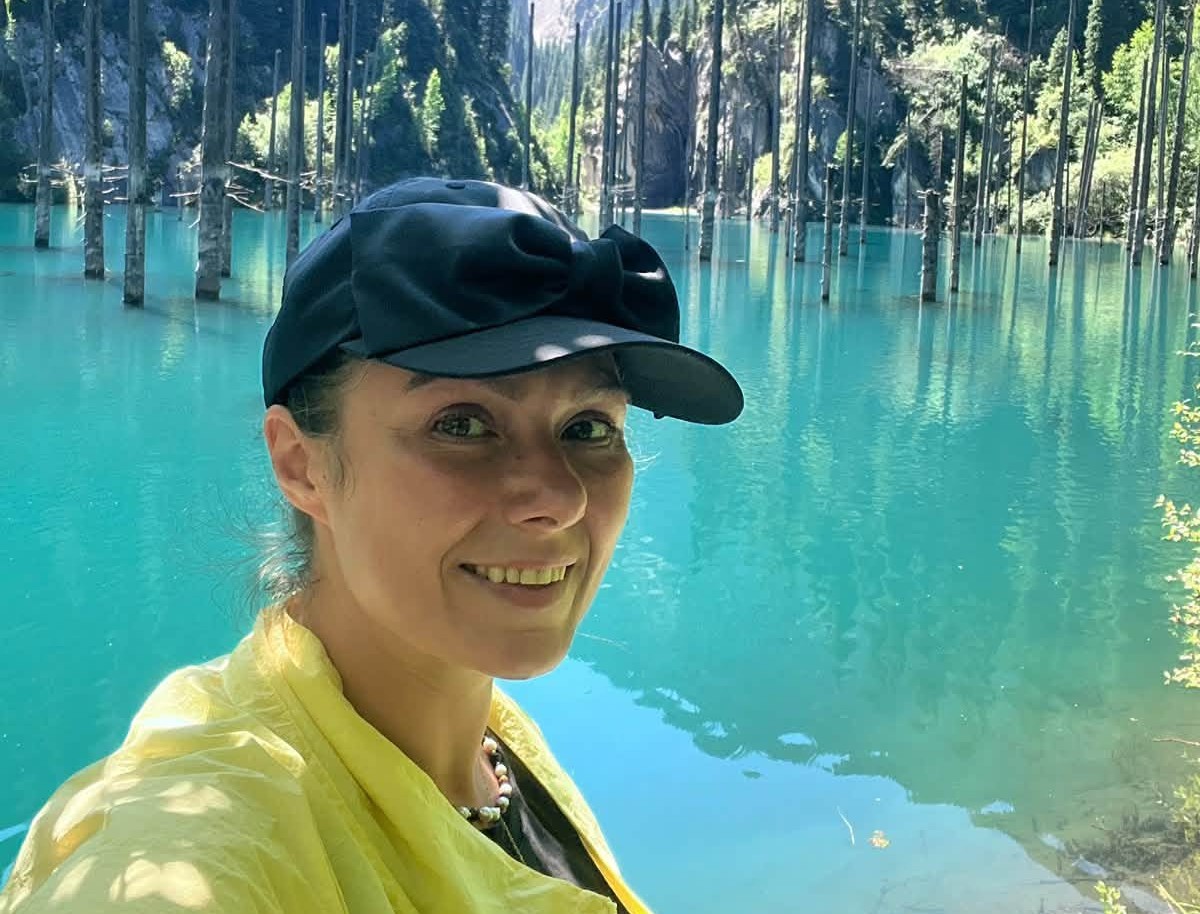
Monika Bilińska / https://www.instagram.com/nika.bilinska/…
–
She Was Supposed to Go to Cambodia for Work. Today, She Is Travelling Through Iraq and Afghanistan. The Extraordinary Story of Monika Bilińska from Ruszków, Poland
The story of Monika Bilińska from Ruszków, near Koło in Poland, is one of searching for one’s own path, having the courage to make life-changing decisions, overcoming unexpected difficulties and learning to trust other people. The 34-year-old has been travelling solo around the world for almost a year, crossing borders and discovering places that many people associate primarily with conflict and danger. Her journey began with a trip to Cambodia, where she was supposed to take up a job. However, things quickly took an unexpected turn. Instead of returning to Poland, Monika decided to keep moving. Today, she is in Iraq, with more countries to visit and thousands of kilometres still separating her from home.
In an interview with the editorial team of Kolskiefakty.pl, she spoke about the difficult beginnings in Cambodia, loneliness, the extraordinary hospitality of people in the countries she has visited, dangerous situations in Afghanistan, and why she decided to stop living according to other people’s expectations and start pursuing her own dreams.
Monika does not have an easy answer when asked who she is. As she admits, she does not particularly like this question and, even at the age of 34, still wonders what she wants to be when she grows up. She laughs that she is a typical Millennial. Above all, she tries to live as well as she can, staying true to herself and making sure she does not regret the opportunities she failed to take.
Travelling has been part of her life since childhood. Her first trips were with her parents, exploring Poland and neighbouring countries. Later, she joined the Wartaki group, with whom she spent almost every weekend on the road, often travelling to concerts. The bus became her second home. Even during her university years, she found it difficult to stay in one place. At times, she studied in two different cities simultaneously, while her professional and educational projects took her to various parts of Poland.
The turning point in her life did not happen overnight. Monika had a home and a successful business. From the outside, it might have seemed that she had achieved everything many people dream of. Over time, however, she began to realise that she was largely fulfilling other people’s expectations, constantly trying not to disappoint anyone and seeking their approval. Eventually, she understood that she could not make everyone happy, while she herself was not happy either.
„I finally decided to choose myself. At least one person is happy with that arrangement,” she says with a smile.
She arrived in Cambodia after a year of travelling, during which she had already visited 12 countries. She wanted to escape the winter and spend some time somewhere warmer. People she had met during the previous season suggested that she stay for another, busier period and help with work. The details were supposed to be agreed upon after her arrival. Reality, however, turned out to be completely different. Monika was deceived, and what was meant to be another stage of her journey became the most difficult period of the entire trip.
„I understood exactly what the saying 'A Pole is a Pole’s worst enemy’ means…” she recalls.
Although she felt safe on the island, she found herself in a situation where she did not know what to do next. She checked into the cheapest hostel and gave herself a week to calm down and think about her next steps. She does not hide the fact that there were tears and moments of doubt. Her friends and her mother helped her, as did the awareness that even the most difficult situation is only one stage of life. She also received support from people she met locally, including a Russian man and a Jewish man who, as she explains, had deserted from wars.
Monika spent almost half a year in Cambodia. It was a difficult time, but also an opportunity to discover the country, its culture and its people. It was there that the next chapter of her extraordinary journey began to take shape.
Initially, Monika had not planned such a long overland journey. Her earlier plans were disrupted by the political situation and the conflict involving Iran and the United States. She had no return ticket to Poland, and, as she recalls, flight prices reached as much as PLN 10,000 one way. Then, quite by chance, she came across a Facebook post in which someone had shared a map suggesting that it was possible to travel overland from Oman back to Poland.
She began wondering whether a similar route might also be possible from Cambodia. She checked and discovered that it was. At first, she thought: „Maybe someday.” But she quickly came to the conclusion that there was no point in putting everything off until later.
„I won’t get any younger, and now is the right time,” she decided.
In April, she set off on the next stage of her journey. Even while she was still in Laos, she was not entirely sure whether she would actually carry out such an ambitious plan. She made her final decision in China. By then, she knew there was no turning back.
Her route so far has taken her through Cambodia, Laos, China, Kazakhstan, Kyrgyzstan, Uzbekistan, Tajikistan, Uzbekistan again, Afghanistan, Iran and Iraq. Each of these countries has brought different experiences. After spending seven months in poorer countries such as Cambodia and Laos, China proved to be a particularly fascinating experience. However, she does not point to any single destination as unquestionably the best.
She emphasises that travelling overland allows her to observe changes that are difficult to notice when flying from one place to another. Cultures, languages and customs do not suddenly change at an airport. They gradually blend into one another, with the influences of one country extending into the next. For her, this continuity is one of the greatest advantages of travelling overland.
If she were to return to any of the places she has visited, it would be Kazakhstan. She managed to see only one part of this enormous country and feels there is still so much more to discover. She has also made valuable friendships in every country, which are just as important to her as the places themselves.
The biggest positive surprise has been Iraq, particularly Iraqi Kurdistan, where she is currently staying. Monika admits that her experiences there are very different from the image one might form based on media reports. In her experience, she feels safe, and the local people are incredibly helpful and welcoming. They often approach her themselves to ask if she needs anything and offer their assistance. She is also fascinated by the local landscape and cuisine.
When asked what impresses her most, she gives a short answer: people and nature. As she puts it, she gets both as part of the package.
While travelling through Afghanistan, Iran and Iraq, she has also discovered just how different the everyday lives of ordinary people are from the picture that often reaches us through news headlines. She does not want to judge entire societies through the lens of politics or armed conflicts.
„They are just like us. They want to live in peace, with prosperity and security,” she emphasises.
The road to Iraq, however, was far from straightforward. While in Kazakhstan, she spent more than a month analysing possible routes for the next stage of her journey. The international situation was complicated, and tensions and conflicts in different parts of the region required considerable caution. She considered travelling through Russia, Turkmenistan and Iran, but further obstacles and warnings kept emerging. Eventually, she decided on Afghanistan. Preparing for this part of the journey took almost two months. She gathered information, examined different possibilities and looked for a way to explore the country without a guide.
Her stay in Afghanistan brought an incident that has remained particularly vivid in her memory. She arrived in Kabul on a night bus. Only later did she discover that she should not have travelled that way. The bus driver and taxi drivers were trying to work out how to get her safely to her hotel without attracting the attention of the Taliban authorities. A woman travelling alone with a male taxi driver could potentially get not only herself but also the man helping her into serious trouble.
At one point, an armed security guard got into the car and was supposed to pretend to be her husband. As Monika recalls, they were supposed to pass through a checkpoint along the way, but they decided to avoid it, aware of the possible consequences. When they reached the hotel, they discovered that she could not be checked in because she had no reservation. The man accompanying her in the taxi threatened to use his Kalashnikov, and eventually a room was found.
Only later did an acquaintance explain just how serious the consequences of the entire situation could have been. Under the rules imposed by the Taliban, some of the actions taken were strictly prohibited. Monika admits that at the time she did not fully realise how dangerous the situation was. Today, she recalls the incident as an example of how important it is when travelling to understand local realities and trust people who know them better.
Travelling alone requires not only courage but also flexibility. Monika emphasises that it is essential to respect local rules, be able to rely on yourself, but sometimes also let go of control and trust local people. They are often the ones who know best how to solve a problem in a particular situation. On a long journey, not everything can be predicted, and everyday life becomes not only about discovering the world but also about dealing with one’s own emotions and sensory overload.
As she points out, in countries that are less popular with tourists, people often show extraordinary hospitality. They offer food and assistance, share their phone numbers and assure her that she can call them if she runs into trouble. Sometimes they even get upset with her if she does not accept their offers of help.
She experiences situations like these almost every day. At present, she is staying in the home of a woman she met by chance. She received the contact through WhatsApp from a young man in a group dedicated to the Middle East after asking whether anyone could help her find accommodation. It is yet another example of how, while travelling, people often turn out to be the most important part of the journey.
Monika does not hide the fact that such an expedition also requires the right approach to finances. She spends most nights staying with local residents, hitchhikes and uses volunteering programmes. Low-budget travel is possible, but you need to be prepared for it and accept that things will not always be comfortable. She does not plan every day far in advance. In the case of Afghanistan and Iran, detailed preparation was necessary, including gathering information and taking care of the required documents. In other situations, she often only needs to know how to get from point A to point B and leaves the rest to whatever the day brings.
This does not mean, however, that travelling alone is a constant adventure without difficult moments. Her biggest crisis came in Kazakhstan, following intensive sightseeing in China and various logistical problems. She was exhausted and missed home and her loved ones. She dreamed that she was back in Poland, and after waking up needed a moment to remember where she actually was. It was also difficult knowing that she was missing family celebrations and could not be with the people closest to her.
Alongside her own journey, Monika is also involved in organising and leading trips for other people. She wanted to create an opportunity for people to meet and travel together, even if they had never met before. She has noticed that many Poles find it difficult to establish new relationships, and travelling with a group of strangers can be a good way to overcome that barrier.
Convincing people to try this form of travelling is not always easy. Fear, reluctance to step outside familiar routines and questions such as „What if…?” often arise. Sometimes these doubts are reinforced by family members and friends who, instead of encouraging people, try to talk them out of their plans. Monika points out, however, that travelling alone and organising a group trip are two completely different undertakings. When travelling with a group, much more has to be planned, and you need to be prepared for various unexpected situations.
For those who dream of travelling alone, she advises against immediately setting off on an expedition to the other side of the world. It is worth starting with a solo trip to a nearby town, gradually increasing the distance and discovering how comfortable you feel in your own company. After all, travelling alone is not just about discovering new places. It also means spending a great deal of time alone with yourself.
In January, Monika plans to continue her journey. Among the destinations she has in mind are federal Iraq, Kuwait, Saudi Arabia, Oman, Yemen, Israel, Lebanon, Syria, Turkey, Greece, Albania, Montenegro, Serbia, Hungary and Slovakia. The final route will depend on the political situation and security conditions in individual countries. She admits that she is particularly curious about Saudi Arabia and Israel, provided she can cross the borders and make those plans a reality.
„I have a million thoughts a minute. Anything can happen here,” she admits.
She adds that she is interested in discovering the truth about the places and people she visits. That is why she wants to experience them first-hand rather than relying solely on other people’s accounts. She would like to return to Poland around May, although that date may also change.
Does she feel like a different person after almost a year on the road? Not entirely. As she explains, travelling has not so much changed her as given her the space to get to know a part of herself that she previously did not have enough time for. She has not discovered a single recipe for life, nor does she try to convince others that there is a universal path to happiness.
„We come into this world without an instruction manual,” she observes.
When asked whether she would embark on such a journey again, she gives an honest answer: „I don’t know.” She does not hide the fact that travelling has its bright and dark sides, and spending long months away from home can be exhausting. Nevertheless, she has no intention of giving up on discovering the world.
After returning, she would like to settle down in one place for a while, although she admits that she knows herself well enough to realise that this probably will not last very long. She already has several ideas for 2027. Some of them she plans to pursue on her own, while others may involve travelling with other people. She does not rule out the possibility that, between January and May, there may be opportunities for others to join selected stages of her journey. For now, she is not revealing any details, because, as she says, life has a way of putting plans to the test.
Her hometown and the Koło region remain important to her. In fact, the name of her travel project, „Koło podróży” (literally, „Circle of Travel”), comes from her hometown. It is no coincidence, because, as Monika emphasises, every one of her journeys begins and ends in Koło.
At the end of our conversation, we asked her what she would say to people from the region who dream of making a change, going abroad or starting something completely new but are held back by fear. With her characteristic sense of humour, she replied that taking out a 30-year mortgage would frighten her much more, because that really is a journey into the unknown.
But on a more serious note, she advises people not to force anything, to build up experience gradually and not to let fear make all their decisions for them. This does not mean that worries will disappear. It is about not allowing them to take away the opportunity to experience something meaningful.
Monika Bilińska’s journey can be followed on social media, where she shares updates on TikTok, Facebook and YouTube. Her adventure is still ongoing, with more borders to cross and more people to meet.
Editorial Team of Kolskiefakty.pl
–
–
Monika Bilińska / https://www.instagram.com/nika.bilinska/…
–